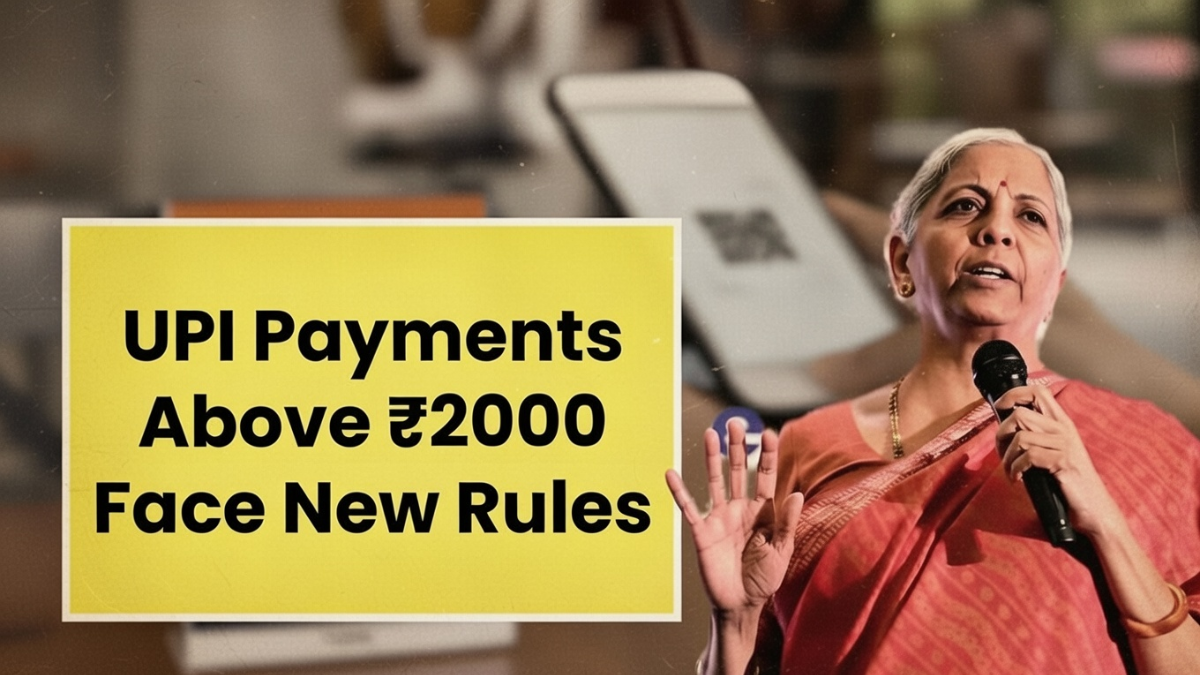
UPI Rule Changes 2026: As India steps deeper into a cashless economy, UPI has become the backbone of everyday payments. From grocery stores and fuel pumps to online shopping and bill payments, millions of transactions happen every minute. In 2026, discussions around new UPI rules, especially for payments above ₹2,000, have triggered confusion and concern among users. Many people are asking whether high value UPI payments will face restrictions, failures, or additional charges.
This article explains the full picture in simple terms. If you regularly make UPI payments above ₹2,000, this detailed guide will help you understand what is changing, what is not, and how to use UPI safely in 2026.
Why UPI Payments Above ₹2,000 Are Under Attention in 2026
UPI transaction volumes have grown rapidly over the last few years. With higher adoption comes higher responsibility for banks and payment systems to prevent fraud, technical failures, and unauthorized transfers. Payments above ₹2,000 are now a major focus because they represent a significant portion of total transaction value and are more attractive targets for scams.
Regulators and payment networks are not trying to limit digital payments. Their main objective is to improve system reliability, reduce failed transactions, and protect users from financial loss. That is why higher value payments are being monitored more closely than smaller ones.
Are There New Restrictions on Paying Above ₹2,000 via UPI
One of the biggest misconceptions in 2026 is that payments above ₹2,000 are being restricted or discouraged. This is not true. There is no ban, cap, or penalty specifically applied to UPI payments above ₹2,000.

Users can continue to send and receive money just as before. The change is mostly on the backend, where transactions above a certain value are passed through enhanced validation systems. These checks happen within seconds and usually do not affect normal users.
What Actually Changes for High Value UPI Transactions
The most noticeable change in 2026 is smarter transaction handling for higher amounts. Banks and UPI platforms are using improved risk assessment models to analyze payments in real time.
If a transaction matches your usual behavior, it gets processed instantly. If something seems unusual, such as a new device, unfamiliar location, or uncommon transfer pattern, the system may pause briefly to verify the transaction. This helps reduce fraud without adding manual steps for users in most cases.
Additional Security Measures Users May Experience
For UPI payments above ₹2,000, some users may occasionally see extra confirmation screens or delayed success messages. This does not mean the payment has failed. It simply indicates that the transaction is being verified before final approval.
In rare cases, the app may request re authentication or show a processing status for a few extra seconds. These security measures are designed to protect your funds and prevent unauthorized transfers, especially if your account is targeted by suspicious activity.

UPI Transaction Limits in 2026 Explained Clearly
Many users confuse the ₹2,000 discussion with transaction limits. In reality, the standard UPI limits remain mostly unchanged in 2026.
Here is a simple overview of how limits usually apply.
| Category | Typical Limit |
|---|---|
| Single UPI transaction | Up to ₹1 lakh |
| Daily UPI transaction cap | ₹1 lakh to ₹2 lakh |
| Merchant UPI payments | Based on bank and merchant setup |
These limits can differ depending on your bank, account type, and UPI application. Payments above ₹2,000 comfortably fall within allowed limits for most users.
Will Payment Failures Increase for Amounts Above ₹2,000
This is a common fear, but the reality is the opposite. The 2026 updates aim to reduce failures, not increase them. High value UPI payments are being handled more carefully to ensure accuracy and faster resolution.
However, failures can still happen due to poor internet connectivity, outdated app versions, or temporary bank server issues. These factors affect all transaction amounts, but higher value payments may take slightly longer to confirm during peak hours.

Faster Refunds and Reversals in 2026
One of the most important improvements in 2026 relates to refunds for failed or stuck transactions. Payments above ₹2,000 that fail but get debited are now monitored more closely by banks.
Auto reversal timelines have been tightened, meaning users can expect refunds faster than before. If a transaction does not reach the recipient, the system is designed to reverse the amount automatically within a defined period without requiring repeated complaints.
Impact on Daily Users, Merchants, and Online Buyers
For everyday users, the impact of these changes is minimal. You can still scan QR codes, pay bills, and transfer money without learning anything new. Most of the upgrades work silently in the background.
Merchants benefit from higher success rates and fewer disputes. Online shoppers gain from more reliable confirmations and reduced chances of double debits. Overall, the ecosystem becomes more stable for both senders and receivers.
Best Practices for Safe UPI Payments Above ₹2,000
To avoid unnecessary issues while making high value UPI payments in 2026, users should follow a few basic habits.

- Always update your UPI app to the latest version
- Use a stable internet connection for high value payments
- Verify the recipient name before entering your UPI PIN
- Avoid repeated payment attempts if a transaction is processing
These steps significantly lower the risk of failed transactions and financial errors.
What to Do If a High Value UPI Payment Gets Stuck
If a payment above ₹2,000 shows pending or processing, do not panic. Avoid sending the same amount again immediately. Check your bank balance and transaction history first.
If the amount is debited but not received, wait for the auto reversal timeline. If the issue is not resolved within that period, raise a complaint through your UPI app. In most cases, refunds are processed automatically.
Conclusion
UPI Rule Changes 2026 are not designed to scare users or limit payments above ₹2,000. Instead, they strengthen the digital payment system to handle growing volumes safely and efficiently. High value transactions remain fully supported, with added security and faster resolution working behind the scenes.
For regular users, UPI continues to be fast, convenient, and reliable. Understanding these changes helps remove fear and ensures confident digital payments in 2026.

Disclaimer: This article is for informational purposes only. Actual UPI rules and limits may vary based on bank and app policies.