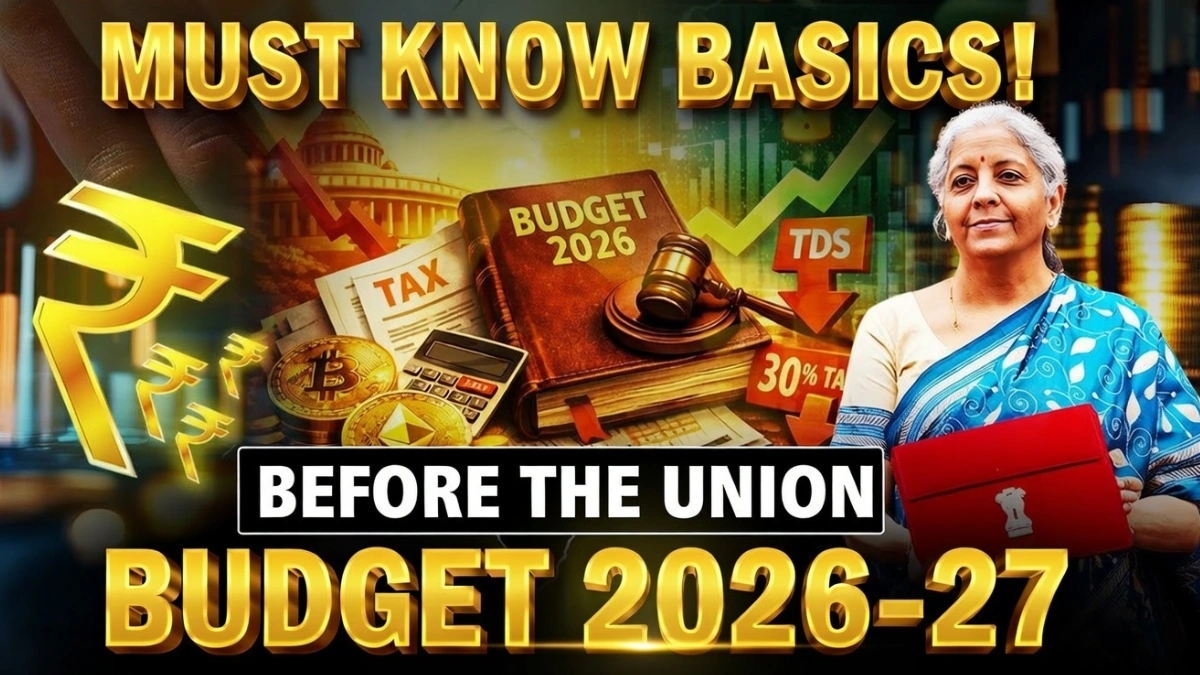
Union Budget 2026‑27 Explained– The Union Budget 2026-27 outlines the government’s revenue and expenditure plan for the financial year. It is a detailed document reflecting fiscal priorities, policy initiatives, and economic strategies. Presented in Parliament, the budget is prepared under constitutional provisions and undergoes a defined parliamentary process before approval. Understanding this process helps citizens and investors follow how funds are allocated and utilized.
Preparation of the Union Budget
The budget is prepared by the Ministry of Finance in consultation with various ministries and departments. The process begins months before the presentation date, involving estimates of receipts, expenditures, and fiscal deficits. Inputs from economic surveys, taxation data, and policy priorities are incorporated. The Finance Minister reviews and finalizes proposals for submission to Parliament.

Presentation in Parliament
The Finance Minister presents the budget in Parliament, traditionally starting with the Railway Budget if applicable, followed by the General Budget. It is introduced as the “Annual Financial Statement” under Article 112 of the Constitution. Members of both Lok Sabha and Rajya Sabha discuss, scrutinize, and debate the proposals, ensuring transparency and accountability.
Parliamentary Approval Process
After presentation, the budget goes through discussions and voting. The Lok Sabha approves demands for grants, while the Rajya Sabha may suggest modifications. Finance Bills and Appropriation Bills are introduced for detailed examination. Constitutional provisions mandate timely approval for smooth functioning of government finances.

Union Budget 2026-27 Overview
| Stage | Description |
|---|---|
| Preparation | Ministries provide expenditure and revenue estimates |
| Cabinet Approval | Finance Minister reviews and submits for Cabinet clearance |
| Presentation | Budget presented in Parliament as per Article 112 |
| Discussion | Parliament debates, seeks clarifications, and proposes amendments |
| Approval & Implementation | Lok Sabha approves grants; Finance Bill passed; funds released |
This table summarizes the major stages of the Union Budget 2026-27 process.
Role of Constitutional Provisions
The Constitution of India provides a framework for budget preparation and approval. Article 112 mandates the presentation of the Annual Financial Statement. Articles 266 and 267 regulate the Consolidated Fund and Contingency Fund for managing public finances. These provisions ensure transparency, accountability, and fiscal discipline in budgetary operations.

Conclusion
The process of the Union Budget 2026-27 is structured to maintain fiscal responsibility, parliamentary oversight, and constitutional compliance. From preparation to presentation, discussion, and approval, each stage ensures that government funds are allocated efficiently. Citizens, businesses, and investors benefit from understanding this process to track financial planning and policy decisions.
Disclaimer: This article is for informational purposes only. Details of the budget process, constitutional provisions, and parliamentary procedures are subject to official government guidelines and notifications.